Flight Cases vs. Cargo Carts
Why Traditional Flight Cases Slow Down Modern Event Logistics.
Custom flight cases have been a staple in event technology for decades. The problem: The industry has evolved. Many flight cases have not.
Productions are getting bigger. Trucks are getting fuller. Time windows are getting tighter. Yet, many companies still work with heavy individual cases, inflexible custom builds, and inefficient transport solutions.
Every crew knows the result: chaos during loading. Empty cases on site. Unnecessary hauling. And truck Tetris, day after day.
Cargo Cart was developed to solve precisely these problems. Not as another flight case, but as a modular logistics system for modern event logistics, touring, and trade fair construction.
Flight Cases vs. Cargo Cart: A Comparison

Conventional Flight Cases
Classic custom flight cases have been standard in the event industry for years – but in daily use, they often bring the very problems that slow down productions. Different sizes, inefficient stackability, and inflexible custom builds quickly lead to chaos in the truck and unnecessary empty space during loading.
As soon as new equipment is added, more individual cases often emerge instead of a functional overall system. This costs space, time, and unnecessarily much personnel for loading, stacking, and transporting.
More Cases. More Chaos. More Truck Tetris.

Individual Cargo Carts
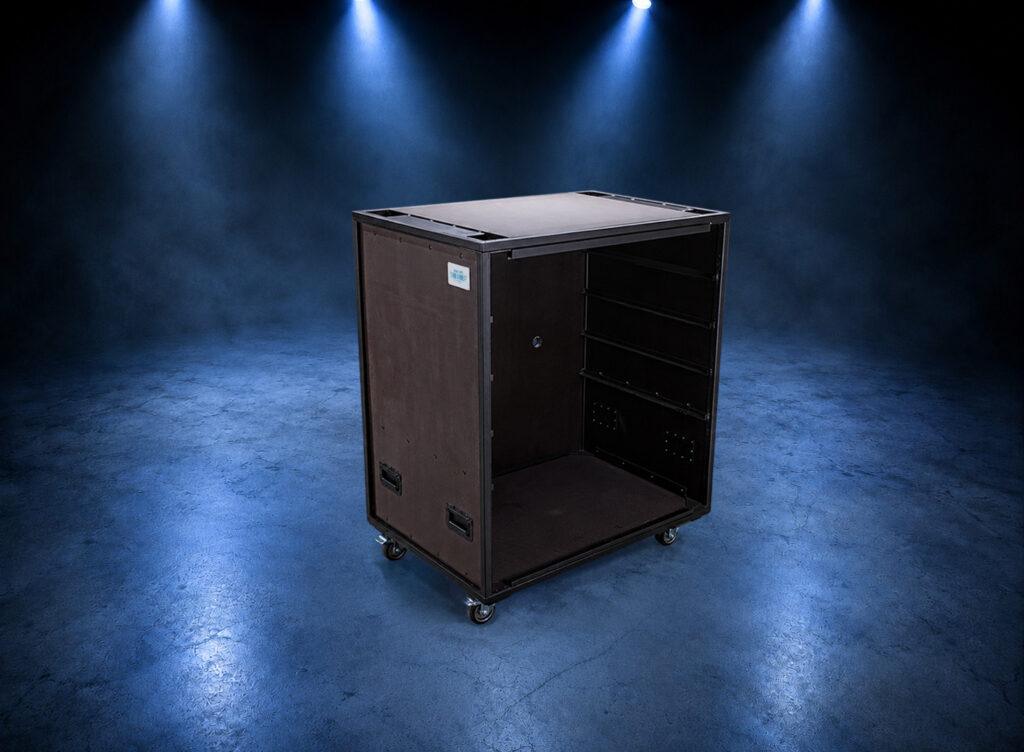
Cargo Cart was not developed as a single flight case, but as a modular logistics system for maximum truck utilization and more efficient event logistics.
All Cargo Carts have standardized external dimensions and are precisely matched to the loading area of a standard truck. This creates neat rows in the truck, less empty space, and significantly faster loading processes.
Safety casters ensure quick handling, while integrated wheel recesses enable stable stacking.
Standard on the outside. Flexible on the inside.
Cargo Carts vs. Flight Cases at a Glance
Honestly: In everyday event work, it’s not theory that counts in the end, but what truly works on the ground. We know that for you, things need to move fast, run smoothly, and ideally without unnecessary effort. That’s where the practical differences between transport solutions quickly become apparent.
Classic flight cases have been standard for years – no question. But in daily handling, they bring challenges you don’t need when under pressure: considerable weight, a lot of maneuvering, additional personnel effort, and plenty of physical exertion during loading and unloading.
Cargo Carts start exactly where it truly matters in the workflow: between warehouse, stage, and floor. From transport to handling to overall logistics on site, many things run faster and more smoothly. Less hauling, less stress for the team, less friction.
Instead of dry arguments, this is about real everyday situations, typical statements from practice, and how workflows change when you rethink logistics.
Is Cargo Cart too heavy? Quite the opposite.
Many think a Cargo Cart made of steel and wood is heavier than several flight cases. In fact, the opposite is true: three flight cases together weigh around 162 kg, while a Cargo Cart with the same loading volume weighs only 117 kg. You transport the same amount of equipment with less weight and fewer individual packages.
01
Why make it hard when Cargo Cart makes it easy?
Every minute counts during loading. With the Cargo Cart, cables, boxes, and accessories are organized in one system, quickly ready for use, and everything stays in its place. This saves time, reduces unnecessary handling, and makes transport easier on your back than with multiple flight cases.
02
Cargo Cart or Transflex?
03
NO BACK STRAIN. NO SWEAT.
Moving flight cases by hand requires muscle power and often multiple helpers. With the Cargo Cart, the complete stack is simply loaded by forklift. This saves time, protects your back, and reduces personnel effort.
04
Hate Comments. Our Answer.
We only have flight cases standing around?
Yes, but the flight cases don’t need to transport our equipment. Because for efficient transport, the Cargo Cart is clearly ahead. For that, the cases surprisingly make good benches, footrests, trash cans, or decorative columns.
05
Yes, you can stack flight cases. But...
“You can stack flight cases too.” Sure – but you also need a lifting device for that. The difference: hardly anyone stacks four flight cases on top of each other. But Cargo Carts are made precisely for that. Two stacked Cargo Carts replace up to five flight cases – with fewer packages and significantly more efficient use of truck loading space.
06
Why Cargo Cart Saves Money.
30 shows in 6 weeks mean 30 times loading, unloading, and setting up. With the Cargo Cart, you save personnel at every gig. Over the entire tour, Cargo Carts often pay for themselves. Afterwards, you can continue to use them, reconfigure them, or integrate them into your warehouse – sustainably and flexibly.
07
Why Cargo Cart is Cooler.
Faster, easier, more back-friendly – that’s what the system is built for. Doors can be opened with one hand without tools, brackets can be used flexibly, and despite loads of up to 900 kg, the Carts are easier to push than a shopping cart. This is made possible by the well-thought-out casters and system design.
08
WHAT IS A CARGO CART?
A Cargo Cart is a mobile trolley into which you directly load your equipment, furniture, or stage technology. Afterwards, it is simply rolled into the truck. It is available in various sizes and versions, stackable, and ensures more structure, efficiency, and a faster workflow in your logistics.
09
The Problem with Classic Flight Cases
Flight cases transport equipment. Cargo Cart optimizes logistics.
Classic custom flight cases are usually created individually. For a microphone here. A spotlight there. A special dimension for that one specific device. Sounds practical at first. But quickly becomes a problem.
Because: Different sizes lead to poor stackability, inefficient truck loading, and unnecessary empty space in the truck. At the same time, heavy lids, complicated handling, and inflexible interior divisions cost time and personnel every day.
Especially in touring, event technology, and trade fair construction, this results in unnecessarily complicated processes: searching for cases, opening lids, unpacking equipment, storing empty cases somewhere, reloading, and restacking. And in the end, everything still never fits neatly into the truck.

Developed for Real Production Conditions.
Cargo Cart works completely differently.
Instead of individual special cases, the system is based on standardized external dimensions and modular transport solutions. All Cargo Cart models were developed precisely for the loading area of a standard truck and utilize the available space significantly more efficiently than classic flight cases.
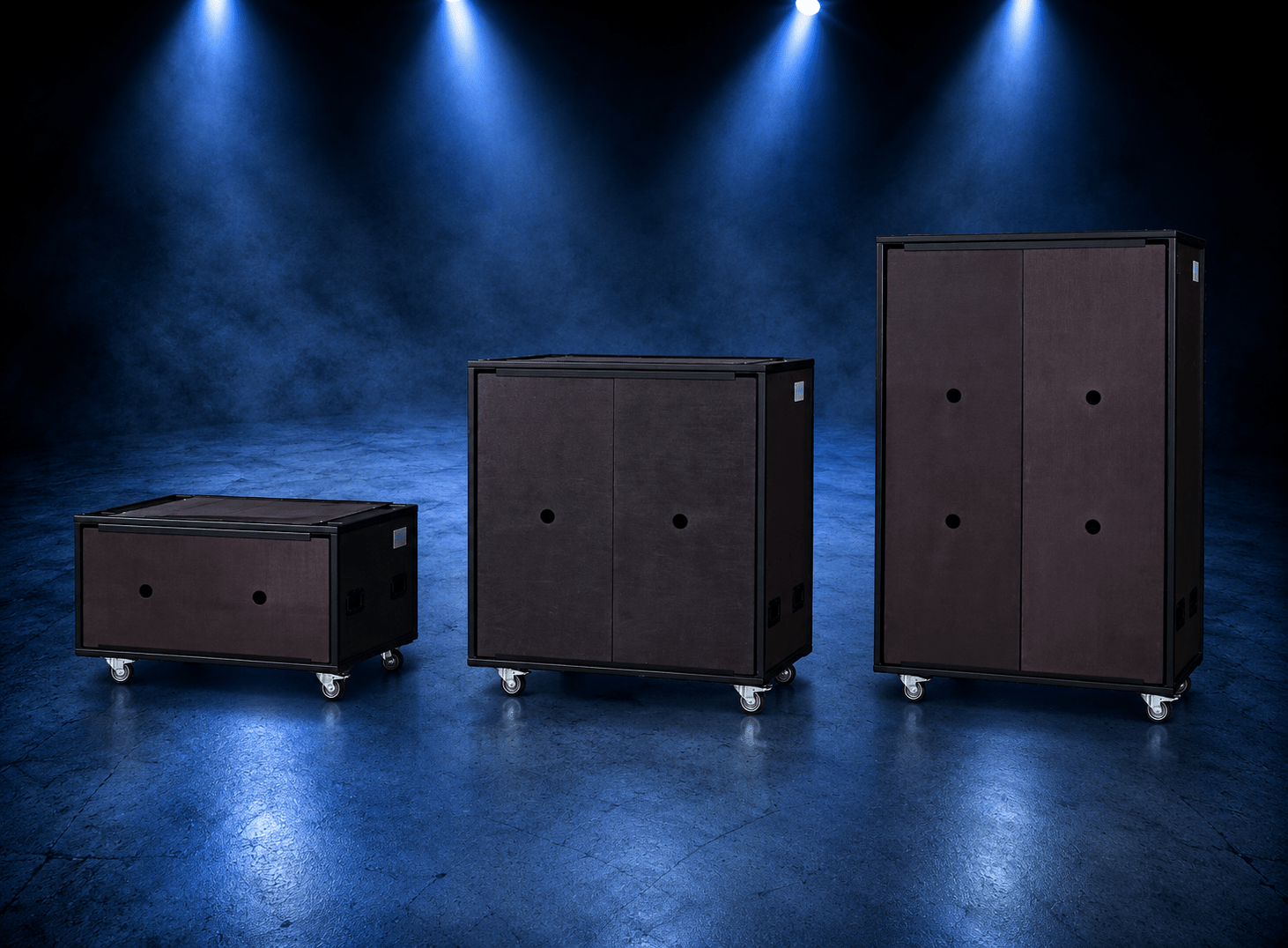
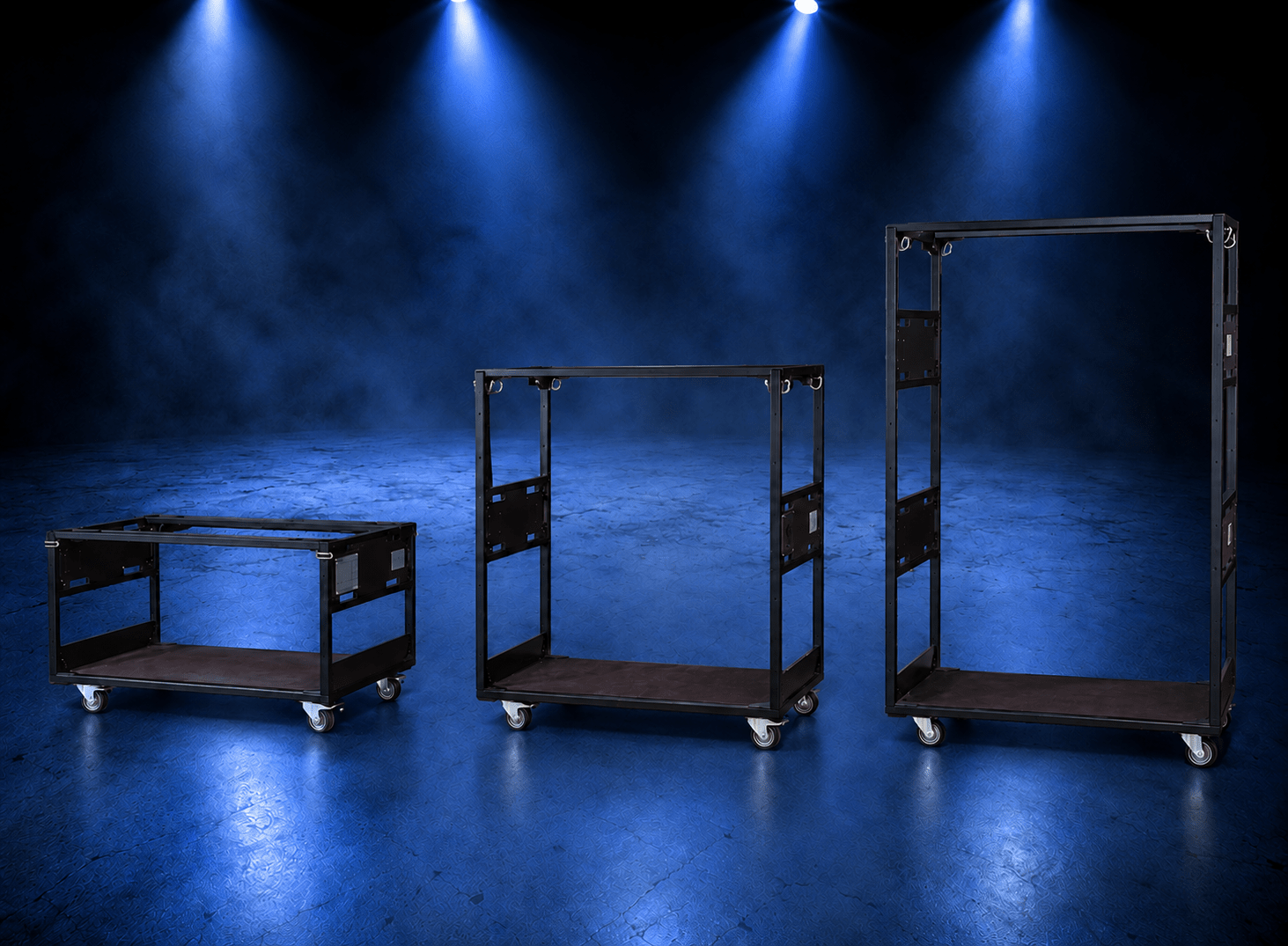
The basis of all Cargo Carts is a standardized base dimension of 1200 x 800 mm. Thanks to intelligent stackability and precisely fitting wheel recesses, all models can be safely stacked on top of each other – regardless of whether they are 718 mm or 1422 mm high.
Individual Logistics Without Rigid Single-Use Solutions.
Classic flight case custom solutions have a big problem: they usually remain permanent.
The foam is cut precisely for a specific device. If the equipment changes, the flight case often becomes unusable. New production? New case.
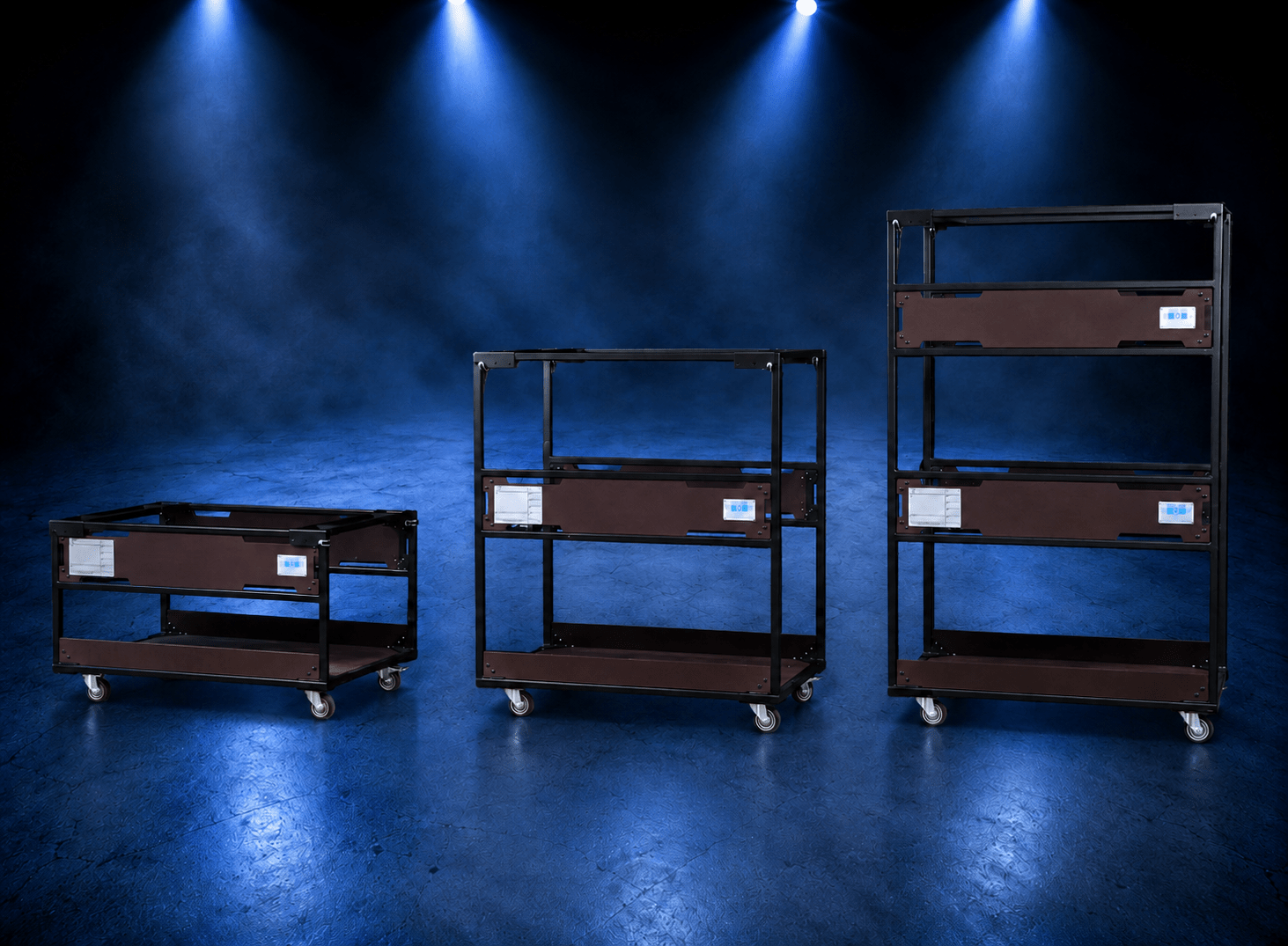
With inlets, trays, racks, and shelves, every Cargo Cart can be flexibly adapted to a wide variety of equipment – from cables to lighting technology to bulky stage components.
Curtains today. Stage legs tomorrow. Touring racks the day after. With Cargo Cart, you don’t need a new case.
Cargo Cart Versions for Every Logistics Need. Not one system. But three solutions.
Cargo Cart is not an off-the-shelf, one-size-fits-all solution. The industry is too dynamic, the equipment too diverse, and no two jobs are alike.
That’s why there are three Cargo Cart versions for different requirements: CC1 as a closed solution for small parts, sensitive technology, cables, lamps, or microphones. CC2 as a more open variant, loaded from the short side, offering plenty of space for larger items. And CC3 for anything wider, bulkier, or simply not fitting into classic cases.
All three models can be individually equipped, flexibly organized, and tailored to your equipment – so your setup doesn’t just fit somehow, but fits perfectly.
Everything You Need to Know Before Load-In.
What is a Cargo Cart?
A Cargo Cart is a modular transport system for event technology and trade fair construction that replaces classic solutions like pallets or flight cases. It enables structured, secure, and fast transport as well as efficient storage of equipment.
Which Industries Are Cargo Carts Suitable For?
Cargo Carts are primarily used for:
Event Technology
Trade Fair Construction
Set Construction
Touring & Live Productions
TV and Film Productions
Warehouse Logistics
Industrial and Special Logistics
What Cargo Cart Variants Are Available?
There are three main variants:
- CC1 (closed): ideal for sensitive technology and small parts
- CC2 (open front): flexible for larger and longer elements
- CC3 (open side): perfect for bulky and wide materials
All variants are combinable and modular in design.
Do Cargo Carts fit in every truck?
Yes, the external dimensions are standardized and adapted to typical truck loading areas (e.g., 13.6 × 2.4 m). This makes loading significantly more efficient.
Are Cargo Carts Suitable for Touring?
Yes. Cargo Cart is ideal for touring logistics because the system is robust, flexible, and designed for repeated use. It helps to transport equipment safely and make workflows more efficient from venue to venue.
Does Cargo Cart Really Save Personnel?
That depends on the application. Many productions benefit from significantly faster loading processes and reduced setup times.
Can I Test Cargo Carts or Get Advice?
Yes, individual consultation is possible. The appropriate system for your requirements will be put together based on your needs.
Are Cargo Carts Manufactured in Germany?
Yes. Cargo Carts are developed and produced in Lünen. The system stands for robust materials, durable constructions, and quality Made in Germany.
Is Cargo Cart sustainable?
Yes. The system is durable, modular, and reusable. Individual components can be adapted or replaced without exchanging the entire system.
What Makes Cargo Cart Better Than Classic Flight Cases?
Cargo Cart transports more material with less effort. Standardized modules, flexible configurations, and optimal truck utilization reduce loading times, personnel effort, and physical strain.
This means for you:
- less chaos in the truck
- faster load-ins & load-outs
- better space utilization
- less hauling
- more overview in the warehouse
- flexibly adaptable to your equipment
Are Cargo Carts Stackable?
Yes, Cargo Carts are designed to be stacked safely and easily. This is ensured by special wheel recesses and a well-thought-out design.
Why is Cargo Cart Better?
Because the system is modular and the Carts can be perfectly combined. This creates structured loading processes instead of “Tetris in the truck.”
Can Cargo Cart Be Customized?
Yes. Cargo Cart remains standardized on the outside, while the system can be individually adapted to your equipment on the inside. This creates a flexible transport solution that suits your material, your workflow, and your productions.
Are Cargo Carts easy to transport?
Yes, Cargo Carts are equipped with sturdy casters, making them easy to move – often even by just one person.
Can Multiple Cargo Carts Be Combined?
Yes, with connection systems, multiple Carts can be coupled together to create larger transport solutions.
How Much Time Can You Save with Cargo Cart?
That depends on the application. Many productions benefit from significantly faster loading processes and reduced setup times.
Can Cargo Cart be combined with existing cases?
In many cases, yes. The system can be flexibly integrated into existing logistics structures.
Can Cargo Cart Also Be Rented?
Yes, Cargo Cart can also be rented depending on your needs. This is particularly useful for special projects, order backlogs, or if you want to test the system in real-world use first.
Make Your Setup Tour-Ready. Ready to roll?
Do you want to know which of our Carts suit your event logistics or how you can make your processes safer and more efficient?
Check out our FAQ. There you’ll find many answers about the use, setup, and combination of Cargo Carts. And if you still have questions or need a specific solution for your production, contact us directly.
We’ll help you find the right setup for your team and your workflow.

Ingo Kaiser
Managing Director